Cusco, the Puma City
It is believed that Cusco reached its greatest splendor during the reign of Emperor Pachacuti. It was also during this golden era that the original urban layout was designed in the shape of a sacred Puma, with the central plaza occupying the position of its chest. Surrounding the plaza were the royal palaces of several Inca rulers, each occupying a vast estate where the Inca’s royal lineage (panaca) resided. The head of the puma was positioned on the high hill where the fortress of Sacsayhuamán stands today.
If you want to know what to do in Cusco, we have created a special guide for you, so you won’t be bored for a single minute when exploring the archaeological capital of the Americas.
In the City of Cusco
1 The Plaza de Armas of Cusco
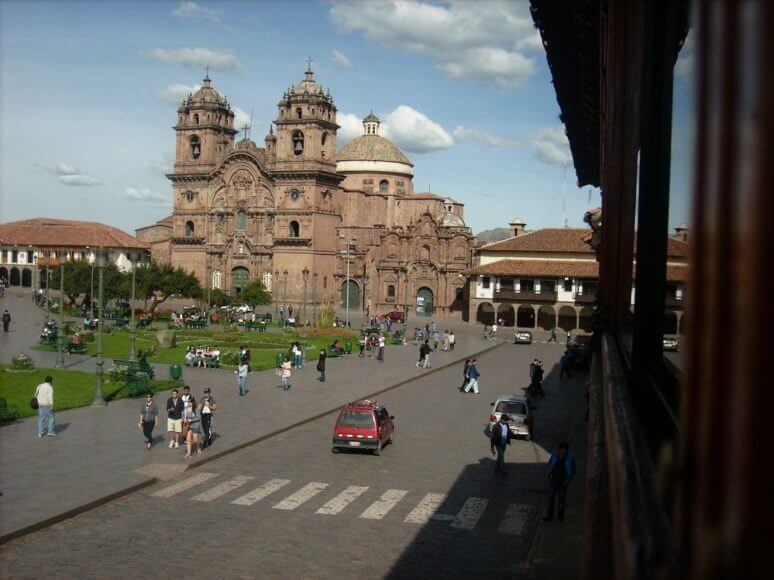
In the times of the Inca Empire, it was called “Huacaypata,” which translates to “place of crying” or “meeting place” (others translate it as “place of the warrior”). This was a premier ceremonial center where the sacred Inti Raymi (Festival of the Sun) took place. Upon the arrival of the Spanish, the square was transformed with stone arcades and colonial mansions that still stand today.
The Plaza de Armas is the vibrant heartbeat of the city, revered as a historic landmark due to its antiquity and the countless monumental events that took place here throughout pre-Hispanic, colonial, and republican eras.
2 Cusco Cathedral
This majestic cathedral was built in two stages: first, the Church of the Triumph (Iglesia del Triunfo) was erected over the ancient Inca temple of Suntur Wasi. In the second stage, the grand cathedral seen today was constructed directly atop the palace of Inca Viracocha. Its choir stalls and carved pulpit are renowned for their intricate beauty, and it houses an invaluable collection of Cusquenian School paintings alongside exquisite embossed silverware.
Visits: Monday to Saturday from 10:00 to 11:30 and 14:00 to 17:30.
3 Church of the Society of Jesus (La Compañía)
In 1571, the original temple was constructed on the grounds of Inca Huayna Cápac’s palace (Amarucancha). It was reconstructed in 1688 following damage sustained during the 1650 earthquake. Upon entering, highlights include the towering three-tiered main altar with Solomonic columns, a finely carved cedar pulpit, and numerous baroque, plateresque, and churrigueresque altarpieces.
Visits during religious services
/12/iglesia-de-la-Compania-de-jesus-Cusco-peru.jpg)
4 San Blas Neighborhood
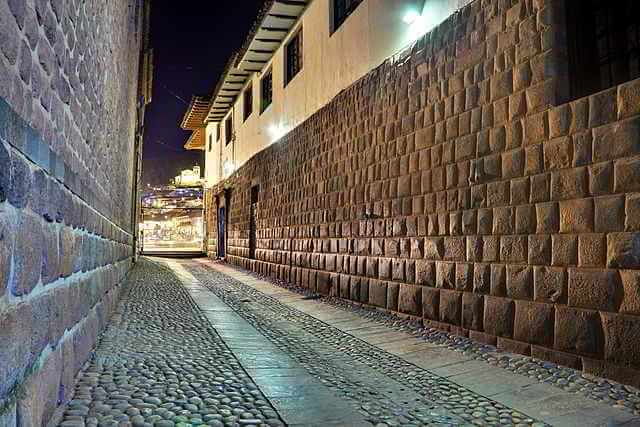
Located just four blocks from the Plaza de Armas. Anciently called “T’oqocachi” (meaning “salt opening”), it is distinguished by charming whitewashed colonial homes, quaint balconies, and steep, narrow cobblestone alleyways. San Blas is home to many welcoming local families offering homestays and boutique lodgings. It is widely celebrated as Cusco’s artisan and bohemian quarter.
Location: 4 blocks from the Plaza de Armas
5 San Blas Church
Founded in 1560 during the colonial era, this church preserves a world-renowned Baroque pulpit—a true masterpiece of woodcarving sculpted from a single cedar trunk, widely attributed to indigenous master artist Diego Quispe Tito.
Visits: Monday to Saturday from 14:00 to 17:30
6 La Merced Church
Built between 1657 and 1680, this historic basilica preserves an invaluable treasure in its sacristy: a magnificent 22-kg monstrance crafted from solid gold and silver, encrusted with precious gemstones and highlighted by a massive siren-shaped natural pearl.
Visits (church): Monday to Sunday (during services) from 7:00 to 9:00 and 17:00 to 19:30.
Visits (convent): Monday to Saturday from 8:00 to 12:00 and 14:00 to 17:00.
Location: Calle Mantas s/n
7 Santo Domingo Convent & Qorikancha
This convent was erected directly over the magnificent polished stone foundations of Qorikancha (“Golden Enclosure”), the paramount Inca temple dedicated to the Sun God Inti, whose interior walls were famously lined with sheets of solid gold. The convent houses an invaluable art gallery depicting colonial life during the 17th and 18th centuries.
Visits: Monday to Saturday from 8:00 to 17:30
Location: Plazoleta Intipampa, corner of Av. El Sol and Calle Santo Domingo
>>You may also be interested in: Cusco Tourist Attractions, Coricancha, Sacsayhuaman8 Santa Catalina Church and Monastery
Founded in 1605 and rebuilt after the 1650 earthquake, this complex was constructed atop the Inca Acllahuasi (“House of the Chosen Women”). Inside, intact Inca stone foundations remain visible alongside an exceptional exhibition of colonial wall paintings, goldwork, Andean textiles, sculptures, and gilded altarpieces.
Visits during religious services
Location: Calle Santa Catalina Angosta s/n
9 Santa Catalina Museum
A splendid collection of colonial textiles, wood carvings, Baroque altarpieces, and Cusquenian School paintings, featuring prominent works by master Diego Quispe Tito.
Visits: Monday to Thursday and Saturday from 9:00 to 17:30; Friday from 9:00 to 15:00
Location: Calle Santa Catalina Angosta s/n
10 Church of San Francisco
Founded in 1645, this grand stone church features twin facades and a Spanish-style masonry bell tower. It houses canvases by great 18th-century Cusquenian painters such as Diego Quispe Tito, Marcos Zapata, and Basilio Santa Cruz, including a colossal 12×9 meter genealogical painting of the Franciscan Order created by Juan Espinoza de los Monteros.
Visits during religious services
Location: Plaza San Francisco
11 Archbishop’s Palace & the Twelve-Angled Stone
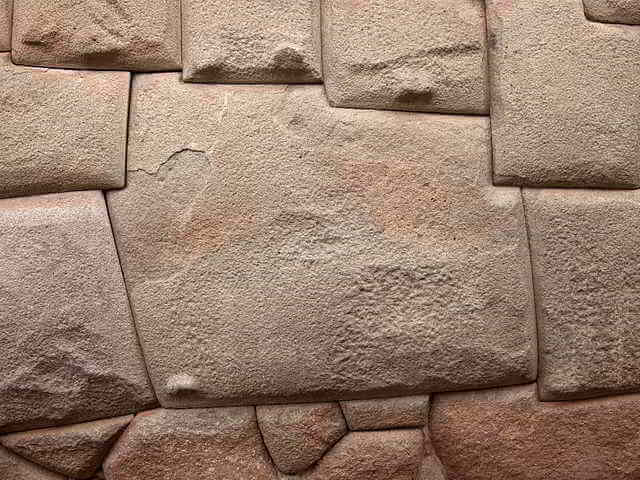
This historic viceregal mansion was constructed atop the monumental masonry of Hatun Rumiyoc, the palace of Emperor Inca Roca. Featuring Moorish-influenced architecture and an exquisite gilded Baroque altarpiece chapel, it now houses the Museum of Religious Art. The palace’s outer stone wall contains the world-famous Twelve-Angled Stone, celebrated for its flawless seamless joinery.
Visits: Monday to Saturday from 8:00 to 11:30 and 15:00 to 17:30
Location: Intersection of Calle Hatunrumiyoc and Jr. Herrajes
/12/Cusco-Piedra-de-los-doce-angulos.jpg)
12 Inka Museum (Admiral’s Palace)
Built in the early 17th century by Spanish magistrate Francisco Aldrete Maldonado (known as “The Admiral”), this palatial manor houses the premier Inca archaeological collection in Peru, showcasing pre-Inca and Inca ceramics, precious metalwork, intricate textiles, and ancestral mummies.
Visits: Monday to Friday from 8:00 to 17:30 and Saturday from 8:30 to 12:30
Location: Calle Cuesta del Almirante 153
13 House of Inca Garcilaso de la Vega
Inca Garcilaso de la Vega was the son of Spanish Captain Sebastián Garcilaso de la Vega and Inca Princess Isabel Chimpu Ocllo. He penned the famous chronicle “Royal Commentaries of the Incas,” recounting his childhood in this very house. Today, the residence houses the Regional Historical Museum, featuring exceptional collections of pre-Hispanic artifacts and colonial fine arts.
Visits: Monday to Saturday from 7:00 to 18:30
Location: Calle Heladeros s/n
14 Pre-Columbian Art Museum (MAP Cusco)
The mansion housing the museum was an Inca ceremonial courtyard (“Kancha”) around 1450, became the home of conqueror Alonso Díaz in 1580, and later the manor of the Count of Cabrera in 1850. Beautifully restored in 2003, its 11 exhibition galleries display 450 masterworks carefully curated from the prestigious 45,000-piece collection of Lima’s Larco Archaeological Museum.
Visits: Monday to Sunday and holidays from 9:00 to 23:00
Location: Plazoleta Las Nazarenas 231
Map of Museum Locations in the City of Cusco
Surroundings of the City of Cusco
15 Sacsayhuamán Archaeological Complex
The surrounding archaeological park encompasses 33 sites, the most famous of which is the fortress-temple of Sacsayhuamán. While primarily constructed for sacred religious and astronomical purposes, its colossal megalithic zigzag walls led the Spanish to classify it as a military fortress. It served as the paramount sun temple of Upper Cusco (Hanan Qosqo), dedicated to Andean cosmology and the worship of the Sun, Moon, Stars, and celestial deities.
Visits: Monday to Sunday and holidays from 7:00 to 18:00
Located 2 km northeast of the city of Cusco (10 minutes by car)
Map of Archaeological Sites in Cusco
16 Qenqo Archaeological Complex
Dating from around 1500 AD, Qenqo (meaning “zigzag” or “labyrinth”) was a sacred shrine featuring underground rock-carved chambers and channels where rituals honoring the Sun, Moon, and stars took place.
Visits: Monday to Sunday and holidays from 7:00 to 18:00
Located 3 km northeast of the city of Cusco (15 minutes by car)
17 Puka Pukara Archaeological Complex
This complex features numerous plazas, inner chambers, aqueducts, and terraces. It is believed to have served as a tambo (resthouse and military outpost). Due to its fortified appearance and reddish stone walls, it was dubbed the “Red Fortress.” Chroniclers note that whenever the Inca visited nearby Tambomachay, his royal retinue lodged here at Puka Pukara.
Located 7 km northeast of the city of Cusco (30 minutes by car)
18 Tambomachay Archaeological Complex
The complex of Tambomachay served a vital ceremonial function associated with the cult of water and the fertility of the earth. Built around 1500 AD, it spans an area of approximately half a hectare and showcases masterfully engineered natural stone aqueducts and fountains that still flow crystal-clear today.
Located 7.5 km northeast of the city of Cusco (35 minutes by car)
19 Inca Trail to Machu Picchu
One of the most famous and breathtaking trekking routes in the world. Along the trail, hikers traverse rugged alpine canyons, glacial streams, and high cloud forests while exploring over a dozen majestic archaeological sites along the ancient royal road.
The classic 4-day route begins at Km 82 along the Cusco-Machu Picchu railway (covering 40 km to reach the citadel through the Sun Gate). Another popular alternative is the Short Inca Trail starting at Km 104, which covers the final leg in just 1 to 2 days.
20 South American Camelid Theme Park: Awanakancha
A living heritage center showcasing llamas, alpacas, vicuñas, and guanacos in a traditional habitat, alongside master demonstrations of weaving techniques and natural dyeing using native plants and minerals. Visitors can also observe restored Inca agricultural terraces and native Andean flora.
Foto CC por Solluh
Your experience when booking: “Cusco City Tour and Nearby Archaeological Sites”
What you will do
- Discover the riches of the Inca Empire with this fascinating and stimulating afternoon tour of Cusco’s most important monuments and ruins.
- See the Santo Domingo Monastery, Qorikancha, Sacsayhuamán, and the Plaza de Armas in Cusco.
- Walk uphill to the colossal megalithic fortress of Sacsayhuamán.